Adele
The Magician's ElephantAdele is Peter Augustus Duchene’s younger sister, separated from him when they were infants and raised in the Orphanage of the Sisters of Perpetual Light. Her story links the book’s themes of loss and uncertain hope to its eventual acts of recognition and care: the name her dying mother chose for her helps Peter find her, and their reunion becomes part of the journey to bring the elephant home.
Identity and Origins
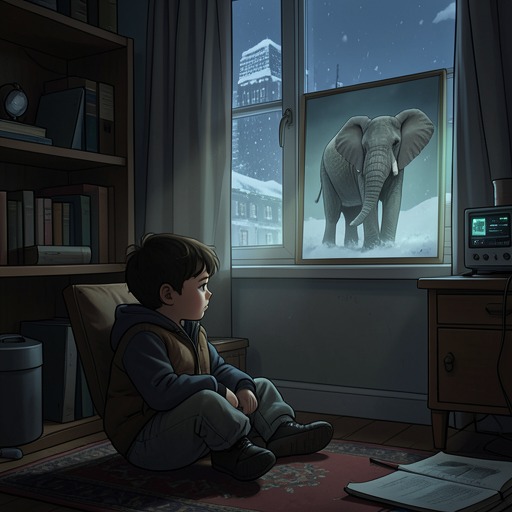
Soon after the opera-house incident, Adele sleeps in the last of a row of small iron beds in the orphanage’s draughty dormitory. She is one of its orphans, living under the institution’s strict threshold rule: Sister Marie, known as the Sister of the Door, is the only person permitted to open and close its front door. That rule shapes Adele’s early appearance in the story through a dream rather than an escape into the outside world.
Adele’s name preserves the first connection between her and her family. Sister Marie explains that the midwife said Adele’s mother insisted on the name before she died. The choice was made on the night of Adele’s birth, when her mother also asked that the infant be placed in Peter’s arms, despite the midwife’s concern that he was too young. Peter held his crying sister. Adele’s family history is therefore defined from its beginning by both separation and an act of care: her mother dies, but not before naming her and asking her brother to hold her.
Dreams and Recognition
Adele begins dreaming of the magician’s elephant soon after the opera-house incident. In the dream, the elephant comes to the orphanage door and asks Sister Marie to let her take the child called Adele. The imagined visit gives Adele a connection to the elephant before the two travel together in the waking world; the elephant’s request also turns the orphanage’s guarded entrance into a threshold between Adele’s confined life and the wider events unfolding in Baltese.
The name chosen by Adele’s mother becomes consequential again when Peter hears Tomas sing it. The sound prompts the memory of the night Adele was born and of their mother asking that he hold the baby. Recognition is not immediate for Adele: when Peter approaches her, she asks who he is, and he identifies himself as her brother. The scene makes their reunion an exchange rather than a simple recovery. Peter brings the lost family bond into the present, while Adele must first encounter him as someone unfamiliar.
Reunion and the Journey
Peter’s reunion with Adele takes place amid the effort to reach Countess Quintet’s home. Leo Matienne holds Peter’s hand as they hurry through snowy streets, while Hans Ickman pushes Madam LaVaughn’s wheelchair. Their movement toward the countess’s home gathers people who have previously occupied distinct parts of the story into a common undertaking.
When Peter finds Adele, he carries her because the snow and cold have left her bare-footed, and because he had promised their mother that he would always care for her. The promise turns the remembered scene of the baby in his arms into a present responsibility. Yet Adele’s attention quickly extends beyond her own reunion: she remembers the elephant and asks whether the animal must be cold and where she is going. Peter tells her they are taking the elephant home.
The group’s departure makes Adele part of a larger procession through the snow. Peter walks ahead carrying her, with Leo beside him; the elephant follows, accompanied by Madam LaVaughn in her wheelchair and Hans, Bartok Whynn, Tomas, Iddo, and Sister Marie. For the first time in fifty years, Sister Marie is not stationed at the orphanage door. The procession thus carries Adele out of the institution’s threshold-bound world and into a collective act of return.
Relationships and Significance
Peter’s relationship with Adele is shaped by a promise made before either sibling could understand its full weight. His care for her is not only an intention recalled from childhood: in the snow, he physically carries her, protecting her from the cold. Adele, in turn, responds to their reunion with concern for the elephant. Her attention redirects the journey from the recovery of one lost family member toward the welfare of another displaced being.
The city’s monthly elephant-viewing day brings people of many kinds into one long line, each carrying hopes, wishes, or desires. The crowd secretly expects that seeing the elephant might somehow make those wishes come true. Adele’s reunion belongs to this atmosphere of shared expectation, but its fulfillment depends on recognition and action: Peter hears her name, remembers his mother’s words, and goes to find her. After the magician leaves, Madam LaVaughn hugs Adele and says that the child is cold; Leo agrees that they should go inside. Adele’s ending is therefore marked not by an explained change in her legal or permanent home, but by immediate welcome and care after a life introduced through orphanhood and separation.